
Asymmetric Learning from the Shadows: What WWII Spies Teach Pharma About Covers, Tells, and Truth-Seeking

I’ve always been fascinated by stories from war of undercover agents who integrated perfectly into enemy territory. I know from my own language experience that passing as a local would be well beyond me, even at my best. Can you even imagine me (a Geordie Englishman) trying to pass as a Texan, despite sharing the same language?
Small, subconscious signals decide who survives under pressure. The best agents - and the best drug developers - train to spot and eliminate their own tells.
So, you’ll understand why I was so drawn to the Tarantino nuances here. In the middle of a crowded French tavern in Inglourious Basterds, a British officer orders “drei Whiskys” perfectly. Then he signals “three” with his index, middle, and ring fingers. The German major notices instantly. Game over. The movie is a rich seam of similar invisible clues that I only learned later.
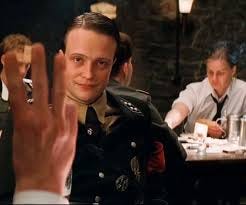
That single cultural tell - not counting from the thumb, as Germans do - unravels the entire cover. It’s cinematic, but it’s also brutally accurate.
During WWII, the British Special Operations Executive (SOE) sent hundreds of agents - many of them women - into occupied Europe on missions that seem almost impossible in hindsight. These were not elite soldiers but often ordinary people with the right languages, nerves, and courage: a French-speaking Jewish refugee, a wireless operator from the Home Counties, a multilingual secretary. They parachuted or landed by Lysander at night, carrying false identities, suicide pills, and the weight of knowing that capture usually meant torture and execution. Some lasted only days. Others survived for years, building resistance networks, sabotaging infrastructure, and feeding critical intelligence back to London - all while maintaining an utterly convincing local persona under constant, lethal scrutiny. Their journeys were extraordinary acts of personal transformation under the most extreme pressure imaginable.
They weren’t faking fluency from scratch. They were embodying a new identity under mortal risk. And the parallels to pharmaceutical and biotech innovation are sharper than they first appear.
The Premise of a Good Cover
Successful SOEs started with a strong Premise: genuine bilingual roots, family ties, or time spent abroad. Fabricated covers collapsed the moment real scrutiny arrived.
The same discipline applies in drug development. A weak scientific premise - thin biology, me-too mechanism, or hope-based target product profile - leads to late, expensive failure when real-world proof hits. Winners build on genuine asymmetric advantage from the outset.
Proof Under Pressure: Training the Tells Away
SOE training was obsessive. Agents drilled regional dialects, local slang, mannerisms, and cover stories until they became muscle memory. They role-played Gestapo interrogations and learned to suppress British habits while remaining calm enough to improvise.
In pharma and biotech, teams too often design studies that protect the narrative rather than maximise Value of Information. They avoid the questions that could kill a project early because bad news carries career risk.
The espionage lesson is clear: you must want to know your tells. The best agents actively sought feedback from locals and trainers. They treated every near-miss as gold. High-performing teams do the same through Real-Time Clinical Trials, adaptive designs, and cultures that celebrate good kills.
Biotech Operating Like Pharma - and Vice Versa
The spy analogy becomes especially sharp when we examine how some biotechs adopt big-pharma habits (polished but defensive covers) while others maintain ruthless adaptability.
Alnylam Pharmaceuticals stands as a masterclass in asymmetric persistence. Founded on RNAi technology - a high-risk premise that many abandoned after early delivery setbacks - Alnylam iterated relentlessly on lipid nanoparticles and clinical learnings. Rather than papering over failures, they confronted them head-on. The result: multiple approvals (Onpattro, Givlaari, Amvuttra), successful expansion into cardiovascular and CNS indications, and a valuation that reached tens of billions, driven largely by organic platform strength rather than mega-M&A. They refined their “accent” under fire instead of switching stories.
Contrast this with biotechs that begin to “operate like pharma” too early: heavy process, risk-averse study design, and narrative protection. They construct elaborate PowerPoint covers that impress boards and investors but crumble when real-world tells emerge - marginal differentiation, inconvenient regimens, or unexpected biomarker data in Phase III. Many such programmes end in quiet wind-downs or fire-sale acquisitions once the market spots the off-accent.
Parabilis Medicines (formerly FogPharma) provides a compelling current example of staying true to a bold premise. Their Helicon peptide platform targets historically undruggable intracellular proteins such as transcription factors. Instead of compromising early for a safer but crowded therapeutic space, the company has raised hundreds of millions while remaining private longer than typical, pressure-testing the platform with rigorous data. Recent milestones - a major Regeneron collaboration on antibody-Helicon conjugates and plans for later-stage development - reflect an earned Promise: platform validation through honest proof, not premature scaling. Parabilis has retained biotech agility (rapid iteration on a novel modality) while forging smart pharma-style partnerships. The tell they have avoided? Diluting the premise to chase quick exits.
These cases illustrate the trap: biotechs that mimic big-pharma bureaucracy lose the learning velocity that made them dangerous in the first place. Meanwhile, pharmas that adopt a biotech mindset - bold premises, fast failure loops, and platform obsession - gain asymmetric edge (witness Lilly’s GLP-1 journey or Regeneron’s repeated platform successes).
The Promise: Delivery Only After Honest Proof
No agent delivered real value - intelligence, sabotage, or networks - until their cover had been thoroughly stress-tested. The Promise was earned, never declared upfront.
This is why Target Product Profiles that survive genuine scrutiny create durable differentiation, while Compromise Product Profiles quietly fade in crowded markets. The market eventually detects the tells - lack of differentiation, marginal efficacy data, or inconvenient dosing - just as surely as Major Hellström spotted the fingers.
Asymmetric Edge in Chaotic Systems
Occupied Europe was noisy and chaotic: refugees, displaced workers, regional dialects, and a population focused on survival. A near-native blend often sufficed if you had local support and the ability to adapt rapidly.
Today’s pharma and biotech landscape is equally noisy - evolving regulators, real-world evidence, payer pressure, and competitor noise. The winners are not necessarily those with the most resources, but those with the fastest, most honest learning loops. They treat small signals (biomarker drift, patient feedback, competitor moves) as early tells. They update beliefs without ego. They build cultures where wanting the uncomfortable answer is the ultimate competitive weapon.
Final Thought
War stories romanticise the glamour (and I’m in no way attempting to minimise the reality), but the real lesson is epistemological: under extreme uncertainty, victory belongs to those who can update fastest on reality’s own terms.
Whether you are dropping behind enemy lines or steering a development programme, the playbook remains the same:
Start with a premise worth defending.
Ruthlessly eliminate your tells through pressure-testing.
Only promise what you have honestly proved.
The market (or the enemy) has an excellent nose for theatre.