
A better decision process for pharma
We know there's a better way...

I wrote recently about the lessons of the PD1/ PDL1 and GLP1 markets - where decision making has visibly made billions of dollars of difference.
Where could it make the biggest difference, though? No-one really denies that it is in phase I, where the numbers show we make vastly more wrong ‘go’ decisions than we should. So, there is great room for a better early phase decision process. But, what would that look like? Is it improving a failed process by a few percent, or starting a different process?
Well… Let’s take a look at a recent paper on GLP1. Here is the map of where it suggests GLP1s could work (ignoring weight loss and diabetes) - this is the kind of map that we produce when we look at path-to-market in phase I, or Discovery. The reason we do that is that, once a path is chosen, all of that optionality tends to be ignored - when you have only one option, you have no choice.
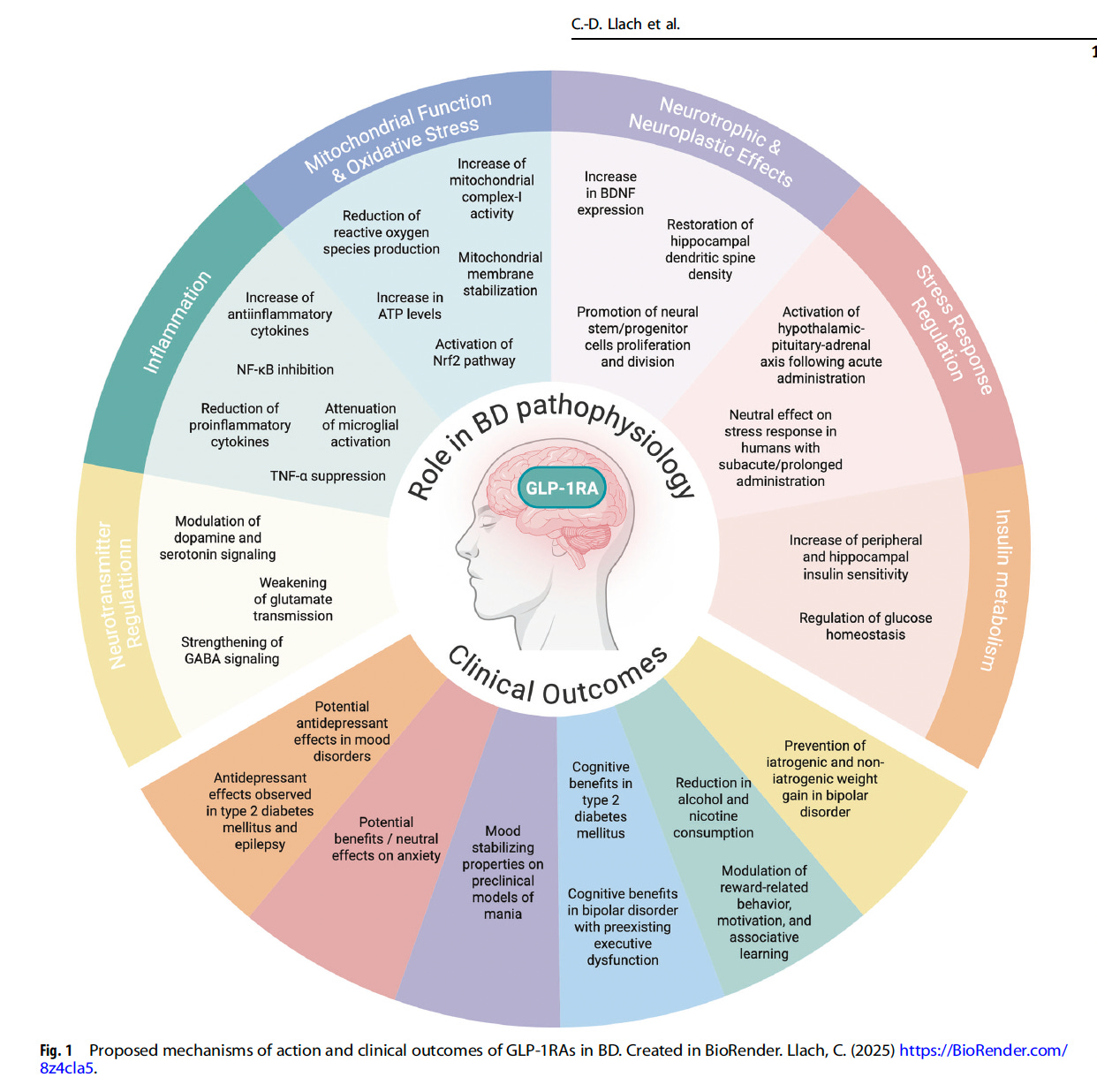
So, you can ignore this optionality before you set out your phase IIs, which, by design, limit your phase III choices. Or you can embrace the optionality before you embark on your phase IIs, which can keep a lot of paths alive, or even inform lifecycle/ launch sequencing.
Why would the former be the standard, instead of our approach? Because it is the one we’re used to, that industry execs grew up on. It, and its products, like the TPP and the eNPV make portfolio decision making easy: using one number we know is wrong, and a profile based on approvability instead of desirability.
But, the world has changed: instead of evaluating a single pathway and producing ‘a’ forecast, we can now project a hundred or a thousand futures, and their potential values and risks. And, think about that: those hundred futures include time of launch, competitive set, probabilities of success within individual indications - even where we might run the studies and the endpoints that we need if we’re going to launch in the US and other markets… All manageable in 2025, in a way that they weren’t, even a few years ago.
Then, layer on top of that the potential impact on portfolio decision making - if you have one hundred options per molecule, you just made the permutation set huge. But, in 2025, not impossible. Think about chess, and how long it has been since a human could beat a computer at chess… From Wikipedia:
The number of possible chess games is immense and theoretically finite but practically uncountable due to the game's complexity. This is quantified by the Shannon number, a conservative lower-bound estimate of the game-tree complexity (i.e., the total number of distinct possible games) calculated by mathematician Claude Shannon in 1950. The Shannon number is approximately 10^120.
And, that is just for a game played on 64 squares. Solved by changing the decision process, rather than the calculating power. Or, following the metaphor of Battleships, where one side is the market, and the other is your assets, as I wrote here, what you learn early becomes critical.
So, we know that the decision process we use is not fit for purpose, we know where to start with a better one, and we know that the power to deliver it is finally here. The desire to stick with a failing process is, by itself, a failed decision.